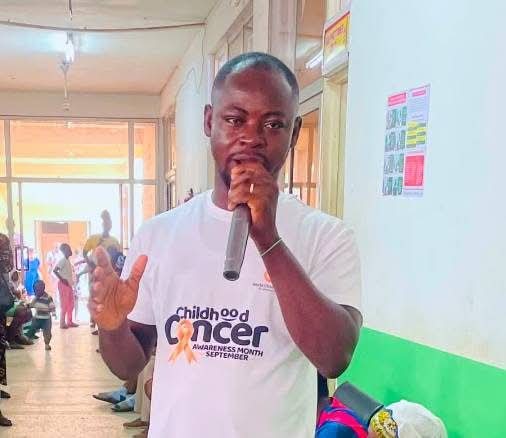
The Upper East Regional Hospital (UERH), Bolgatanga, has intensified efforts to raise awareness about childhood cancer through a health education session held for clients at its Outpatient Department (OPD).
The move is part of the hospital’s ongoing health promotion activities.
The session aimed to increase public understanding of childhood cancer, highlighted the importance of early recognition, and prompt medical attention to improve treatment outcomes.
Clients who were at the OPD to seek health care received practical information on the common warning signs and symptoms of childhood cancer.
Mr Jonah Awinbe Ayamba, a Paediatric Oncology Nurse and Assistant Unit Manager at the hospital, mentioned persistent unexplained fever, unexplained weight loss and appetite, persistent fatigue, easy bruising or unusual bleeding and recurrent bone or joint pain.
He added unexplained swellings or lumps on the body, persistent headaches accompanied by early morning vomiting, changes in vision such as a white pupil or squint, persistent enlargement of lymph nodes without obvious infection, and recurrent infections that did not respond to treatment.
He urged parents and caregivers to seek immediate medical evaluation whenever they observed any of the warning signs in their children.
He noted that early diagnosis and timely treatment significantly improves chances for successful treatment and survival for children diagnosed with cancer.
Mr Ayamba further cautioned members of the public against delayed medical care and reliance on traditional or other unproven forms of treatment and said prompt assessment at the nearest health facility allows for early diagnosis and appropriate referrals.
He addressed common misconceptions about childhood cancer and explained that the disease was not contagious and could not be transmitted through physical contact, sharing food or utensils, or interaction with affected children.
Mr Ayamba further clarified the misconception that childhood cancer was solely a spiritual condition and acknowledged individual’s religious beliefs as a common phenomenon.
He emphasized the need for members of the public to seek prompt medical evaluation for their children as the first step whenever childhood cancer was suspected, as that greatly improved the chances of early diagnosis, effective treatment, and better outcomes.
The session was highly interactive, as clients asked questions and shared their concerns.
The level of participation reflected growing public interest in understanding childhood cancer and the critical importance of early detection.
Through the initiative, the UERH reaffirmed its commitment to promote public awareness, encourage early health-seeking behaviour, and improve outcomes for children with cancer through timely diagnosis, treatment, and referral.